
Mindfulness or Gratitude at Work: Which Can Help Us Build Resilience?
This post explores how common wellbeing interventions; gratitude and mindfulness, may help ease workplace stress.
Two simple wellbeing practices are often suggested for workplace stress. But do they work in the same way — and can either intervention really help protect us from burnout?
No one likes workplace stress (except maybe a toxic boss!).
We have already spoken about this in my previous blogs (which I hope you have read!) But let’s set the scene anyway:
You had a difficult customer/ client who made you feel like dirt, a million emails to answer, and a stressful meeting. Once you left the office and had a horrible commute home on the train where someone sneezed on you. You finally get home and you breathe a sigh of relief…...but no, you still can’t shake of the eery feeling that you wish you left at the office. Workplace Stress.
When demanding days become the norm rather than the exception, chronic workplace stress can contribute to burnout and affect both wellbeing and performance.
Two popular wellbeing practices take very different approaches to workplace stress. What does the research suggest?
Workplace stress is more than simply having a difficult day. In high-pressure environments, prolonged stress can contribute to emotional exhaustion, burnout, absenteeism, presenteeism and poorer performance.
When considering an example cohort when examining the research around workplace stress and burnout, those working in healthcare are strong candidates. Doctors, nurses, paramedics and other frontline professionals need to think clearly and respond effectively while working under considerable pressure.
Two interventions that have been studied to assist these professionals are mindfulness and gratitude.
Although they are often seen as wellbeing interventions that go hand in hand, they have key differences that are worth exploring.
Mindfulness: responding differently to stress
Mindfulness encourages us to bring attention back to our present experience rather than becoming caught up in thoughts about what has happened or what might happen next.
This may be particularly relevant to burnout.
Research discussed by Taylor and Millear (2016) associated aspects of mindfulness with reduced emotional exhaustion and cynicism and with protecting professional efficacy — three areas closely related to workplace burnout.
Mindfulness programs in workplace research have often involved considerably more than a quick breathing exercise. Some interventions have taken place over approximately eight weeks and incorporated both workplace and home practice. Burnout can then be assessed using measures such as the Maslach Burnout Inventory, which examines emotional exhaustion, depersonalisation and personal accomplishment.
There is also evidence that people do not necessarily respond to mindfulness in the same way. A review by Eby and colleagues (2019), suggested that employees who are more vulnerable to stress — including those lower in resilience or higher in neuroticism — may potentially benefit more from mindfulness-based training.
Basically, mindfulness may be particularly useful as a way of changing how we respond to stressful experiences.
Gratitude: changing what we notice
Gratitude approaches wellbeing from another direction.
Rather than focusing primarily on our response to difficult thoughts and emotions, gratitude interventions encourage us to deliberately notice and appreciate positive aspects of our experiences.
A six-week gratitude intervention was associated with improved life satisfaction compared with a control group. Other research has linked gratitude with coping and with a more positive recollection of life experiences.
When we are being constantly bombarded by negative experiences at work, gratitude helps bring our attention to intentionally noticing positive experiences. That might be a supportive colleague, a funny conversation near the watercooler or an assignment you had been working on that got great feedback from the team.
Gratitude may also have a social dimension. Workplace interventions proposed in the research included gratitude journals, gratitude walks and even a shared gratitude board on which employees could quickly record something they appreciated. The shared gratitude board could potentially build gratitude as a collective experience in a workplace, rather than been seen as a purely individual undertaking.
So, which is better for preventing burnout?
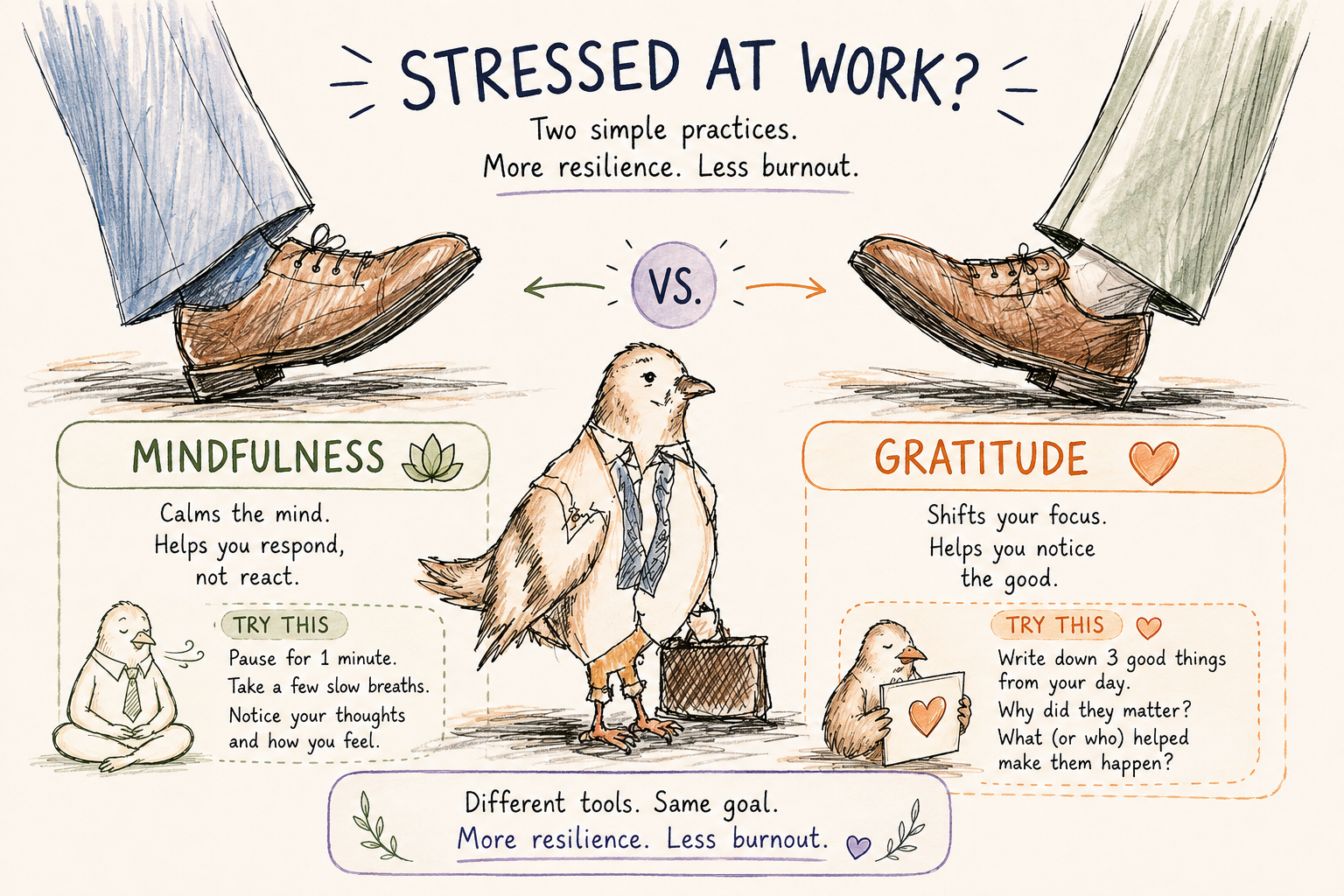
There is no clear winner here.
Rather, the two practices appear to target different psychological processes.
Mindfulness may help us become less reactive to stressful experiences and more grounded in the present.
Gratitude may help us direct more attention toward positive experiences that can otherwise be overshadowed during stressful periods.
Mindfulness appears particularly relevant to emotional regulation, present-moment awareness and our response to stress, while gratitude may support wellbeing by strengthening appreciation, positive attention and potentially social connection.
The two can be viewed as more complementary than competing interventions.
What about the reality of implementing these in the workplace?
There are many practical limitations. Workplace mindfulness programs require participation, appropriately trained facilitators and enough time for employees to practise. Research has identified lack of interest, time pressures and interventions that don't fit the pace of the workplace as potential barriers.
Gratitude practices can encounter similar problems. Even simple journalling may become another task for an already stressed and overwhelmed employee, although very brief interventions such as recording a single grateful moment may be a sustainable way or employees to incorporate gratitude into their day.
Reality Check: wellbeing interventions need to fit the workplace in which they are being used.
Asking exhausted employees to become more mindful or grateful is unlikely to make up for excessive workloads or an unhealthy workplace culture. However, the two interventions can be experimented with to see how they might work in your day and see for yourself:
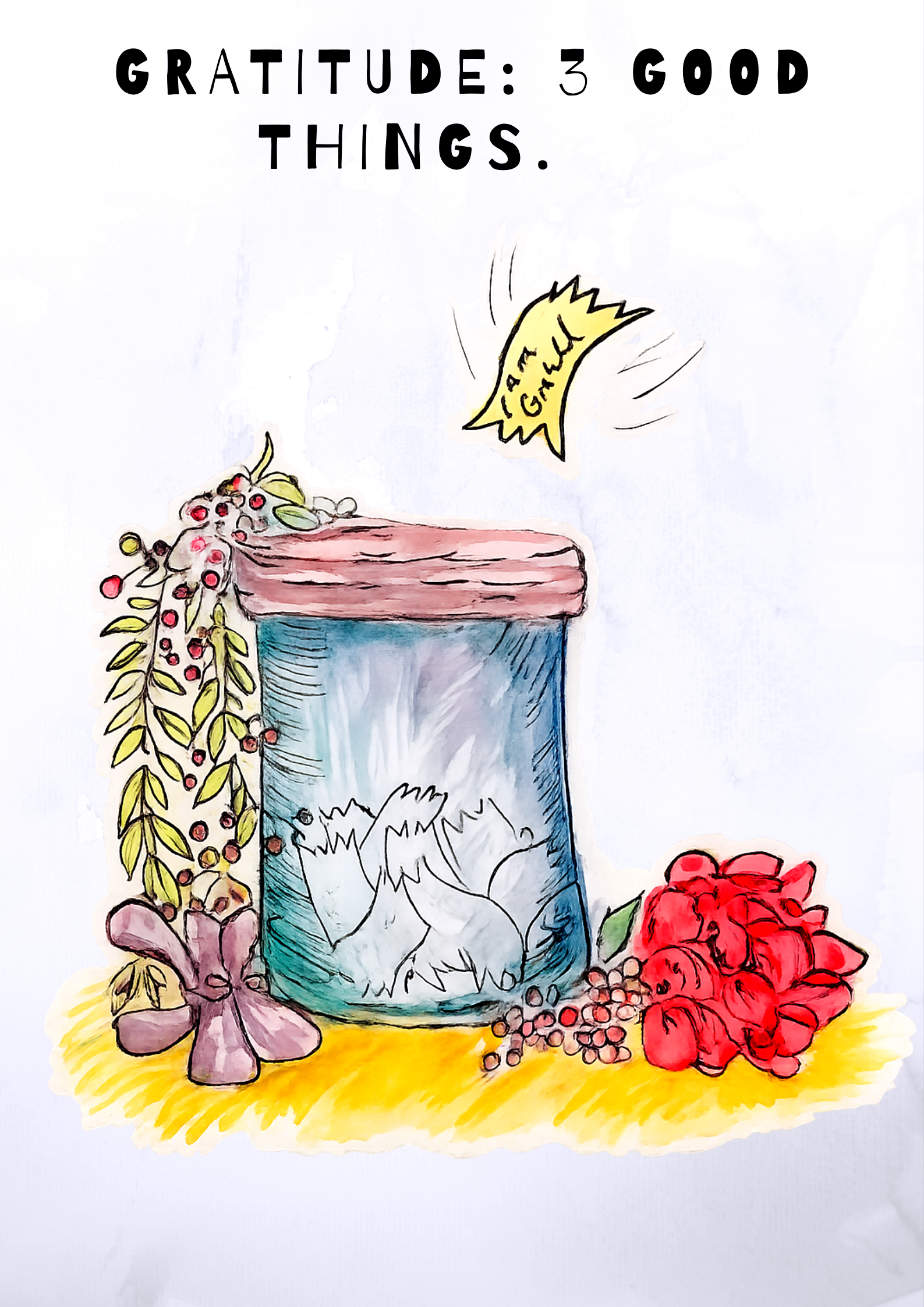
Gratitude
Try Three Good Things after work
At the end of your working day, write down:
1. What went well today?
2. Why did it matter to me?
3. What contributed to it happening?
Do this daily and record the results. Did you feel less stressed, did you feel more tolerant, a sense of hopefulness? Write it all down!
Mindfulness: Try a 60-second reset between tasks.
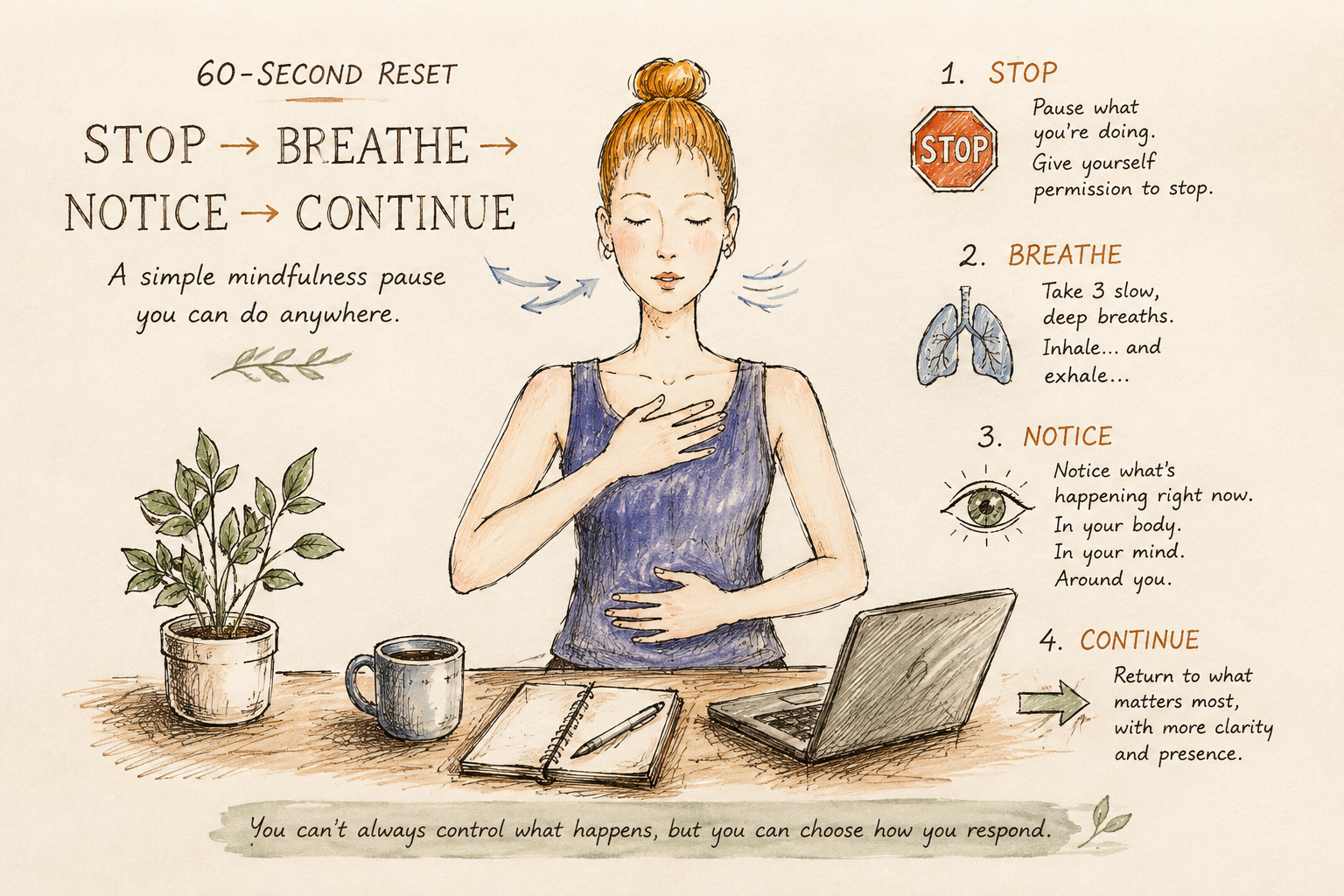
STOP → BREATHE → NOTICE → CONTINUE
Pause.
Take several slow breaths.
Notice what is happening in your body and mind without immediately trying to change it.
Then deliberately return your attention to what you're doing next.
The goal isn't to magically remove stress.
It's to create a little space between experiencing stress and automatically reacting to it.
Record your results! What did you notice this changed during your day? Positive effects and negatives. Make a point to ask yourself: What didn’t mindfulness or gratitude help?
Sometimes recording what a wellbeing intervention doesn’t help in our lives allows us to see more clearly what gaps in our wellbeing need filling, possibly by a different wellbeing intervention!
References
Eby, L. T., Allen, T. D., Conley, K. M., Williamson, R. L., Henderson, T. G., & Mancini, V. S. (2019). Mindfulness-based training interventions for employees: A qualitative review of the literature. Human Resource Management Review, 29(2), 156–178.
Goodman, M. J., & Schorling, J. B. (2012). A mindfulness course decreases burnout and improves well-being among healthcare providers. The International Journal of Psychiatry in Medicine, 43(2), 119–128.
Kaplan, S., Bradley-Geist, J. C., Ahmad, A., Anderson, A., Hargrove, A. K., & Lindsey, A. (2014). A test of two positive psychology interventions to increase employee well-being. Journal of Business and Psychology, 29(3), 367–380.
Kerr, S. L., O'Donovan, A., & Pepping, C. A. (2015). Can gratitude and kindness interventions enhance well-being in a clinical sample? Journal of Happiness Studies, 16(1), 17–36.
Lanham, M. E., Rye, M. S., Rimsky, L. S., & Weill, S. R. (2012). How gratitude relates to burnout and job satisfaction in mental health professionals. Journal of Mental Health Counseling, 34(4), 341–354.
Taylor, N. Z., & Millear, P. M. R. (2016). The contribution of mindfulness to predicting burnout in the workplace. Personality and Individual Differences, 89, 123–128.


